SafeHouse is an offline-first smart home system designed to provide its users with a high level of privacy.
- SafeHouse: Offline-First Smart Home
SafeHouse is an offline-first smart home & IoT Platform system that aggressively prioritizes user privacy.
In a world where smart home devices are increasingly connected to the cloud, SafeHouse takes a different approach. By keeping all data and processing within the home network.
SafeHouse makes extensive & aggressive efforts to minimize the amount of user data that is revealed to 3rd Party Services, Platforms, & organizations of a wide variety.
The overall goal of SafeHouse is to MINIMIZE the amount of data that is shared with third parties.
This is because if you are using a smart home system, you are likely to be sharing a lot of data with third parties already.
If your are putting your actual safety and security in the hands of a """private""" smart home system... LOL
SafeHouse is designed to be transparent about the fact that it is inevitable some data from this platform will leak & that data will be shared with 3rd parties. We try generally try to minimize this, & obfuscate the data that is shared, but it is impossible to eliminate it entirely.
We make efforts to minimize the amount of worthwhile & valuable data these 3rd parties can extract by
- Keeping data local (within the home network)
- Storing & Spreading Decoy Data (to confuse
3rd partiesabout what data is relevant, making building an overall advertising profile on you more difficult, and your data less valuable!)- false identity with fake identity generation
Why do I have to share data with 3rd parties?
the reasons for sharing that data are that you simply must make requests to the internet if you want to have real time & actually relevant data & information for your smart home.
SafeHouse offers a comprehensive set of features and interfaces designed to provide a seamless and secure smart home experience.
Users can interact with the SafeHouse environment through multiple intuitive interfaces:
- Web Dashboard: A comprehensive web interface for managing settings and monitoring home status.
- Voice Commands: Utilize voice control for hands-free operation and convenience.
- Physical Interactions: Incorporate buttons and NFC tags that trigger predefined actions via HTTP requests to the server.
- Open Source: Entirely open-source to ensure transparency and community-driven enhancements.
- Privacy-Centric: Designed with privacy as a core principle, ensuring user data is protected and secure within the home network.
- Primary Language: Python
- Frameworks and Tools:
Rather than competing with scalpers for the official Raspberry Pi 5 and ending up paying over $100 USD per unit, we will use the Le Potato by Libre Computer. These are typically available for about $30 USD on Amazon and can be purchased in units of 10, making it easy to get enough devices for the entire house.
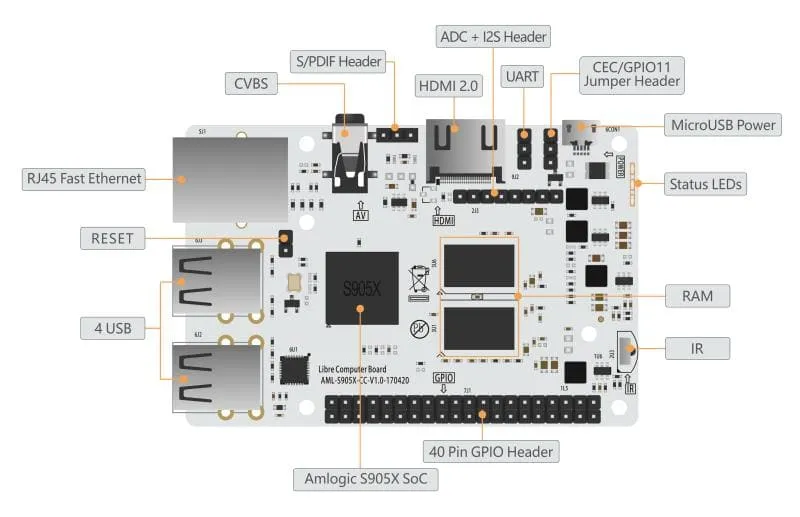
We will be running Debian on the Le Potato. Other devices will also run Debian-based distros (like laptops and servers).
Hosting services like Ollama on laptops running Debian.
(Here you can provide detailed instructions on how to set up the software and hardware components.)
(Discuss the security protocols and measures implemented to ensure user data privacy and system integrity.)
(Outline potential future enhancements and features to be added to the SafeHouse project.)